
Your logistics team, now has a companion - MAC
Talk to MAC in plain language and it gets to work. In the background, it's continuously re-optimizing routes, inventory, and schedules across Orders, Fleet, Warehouse, and Shipper, catching what's about to go wrong before it does. It handles the clear-cut cases directly, and brings you the judgment calls, with the context already attached.

The routine gets handled. The judgment calls come to you.
Detects
A shift in live conditions, an exception, a flagged record, an imported file, or a direct question — any of these starts it.
Escalates
MAC identifies the right domain — delivery, orders, warehouse, fleet — and consults that specialist.
Risk Scoring
Clear, rule-bound cases proceed. Anything ambiguous gets routed to a person instead of guessed at.
Executes
A shift in live conditions, an exception, a flagged record, an imported file, or a direct question any of these starts it.
Logs
Every action and every escalation is recorded. Nothing happens without a visible reason.
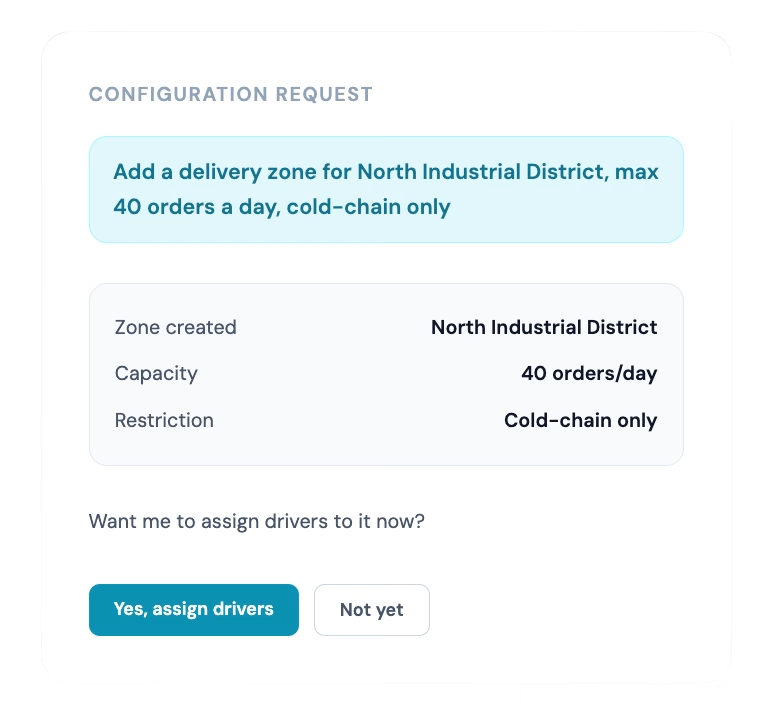
Set it up by telling it, not clicking through it.
Adding a delivery zone, creating a pricing tier, adjusting a routing rule — normally a maze of settings screens. With MAC, you describe what you need in plain language, and it configures it, then shows you exactly what it set up before anything goes live.
- Create zones, pricing tiers, and routing rules by describing them, not navigating menus
- Confirms every configuration change before it goes live, nothing applied without review
- Works the same way across Orders, Fleet, Warehouse, and Shipper settings
- Turns a setup that used to need a support ticket into a single conversation.
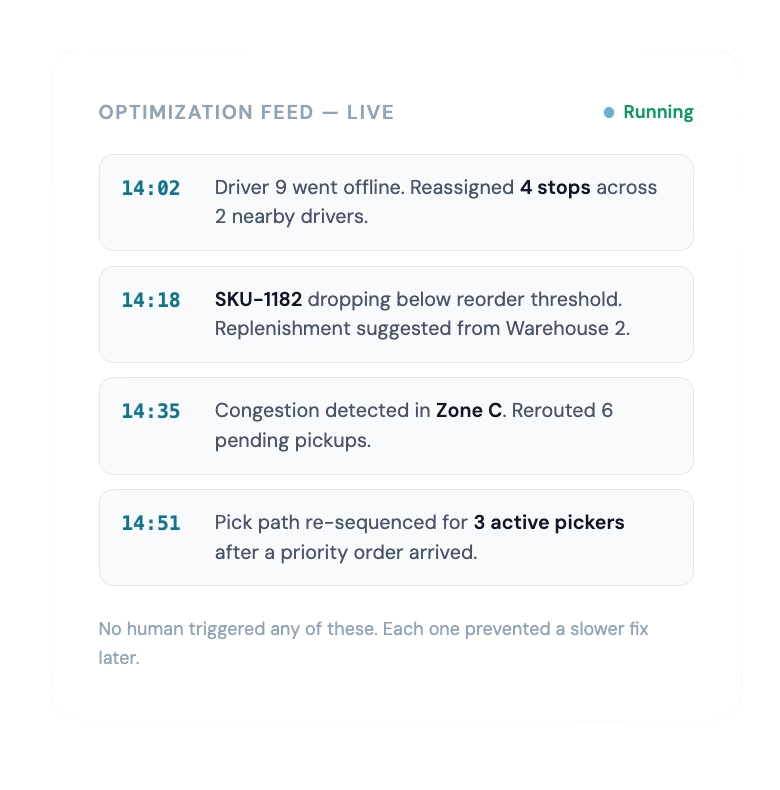
It's optimizes before there's a problem to react to.
Most systems wait for something to break, then respond. MAC works the other way. It continuously re-evaluates routes, inventory placement, and schedules as conditions shift through the day, a driver going offline, a SKU running low, a zone getting congested, adjusting before any of it turns into an exception you’d have to deal with.
- Re-optimizes delivery routes as live conditions change, not once at the start of the day
- Re-evaluates warehouse slotting and inventory placement as velocity and stock shift
- Surfaces the data that actually matters right now, not everything that’s merely available
- Processes complex, multi-variable scenarios in seconds, the kind a manual replan would take hours on.
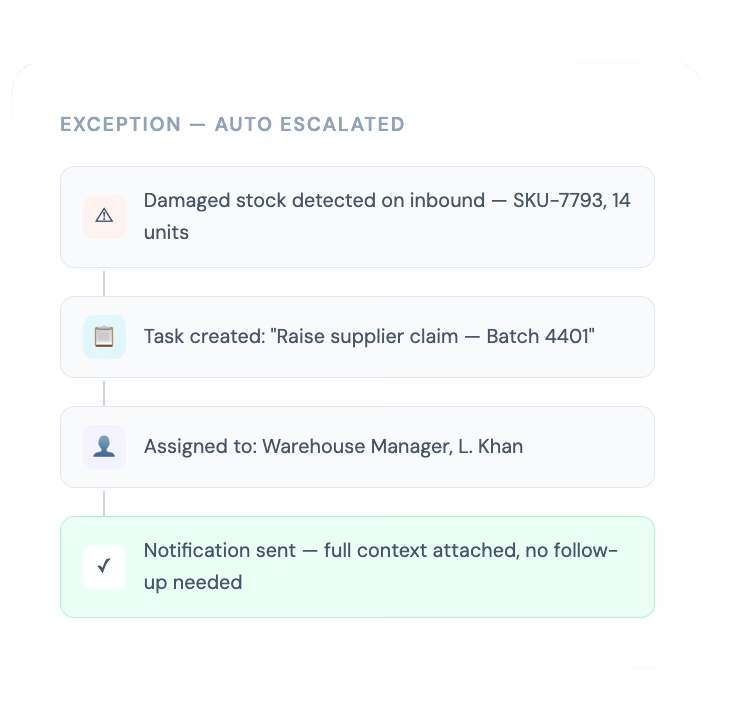
It escalates before you'd even know.
An exception doesn’t just sit in a queue. MAC raises the task, assigns it to the right person, and sends the notification, all in one motion. No manual ticket creation, no “did anyone see this” follow-up message an hour later.
- Creates and assigns tasks automatically when an exception needs a person
- Notifies the right person directly, no manual escalation chain
- Full context attached to the task, so no one starts from zero
- Works across exception types, warehouse damage, fleet delays, order anomalies
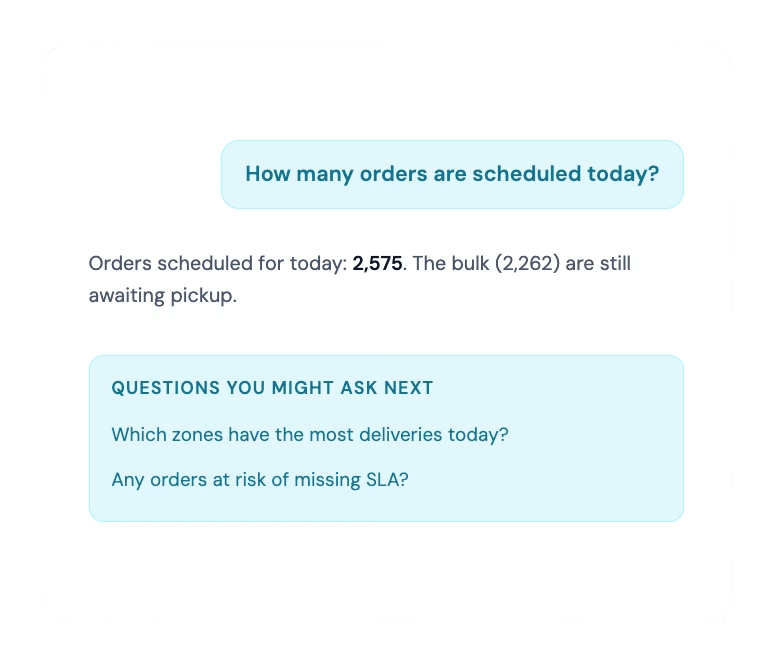
Ask anything, Anytime.
Not every question needs to become an exception before MAC will look at it. Ask it anything on any screen, in plain language, and it pulls the real answer from live data, explains what it means, and tells you what to ask next.
- Plain-language questions, answered from real operational data.
- Visible reasoning, see which specialist and tool it consulted.
- Suggests the next useful question after every answer.
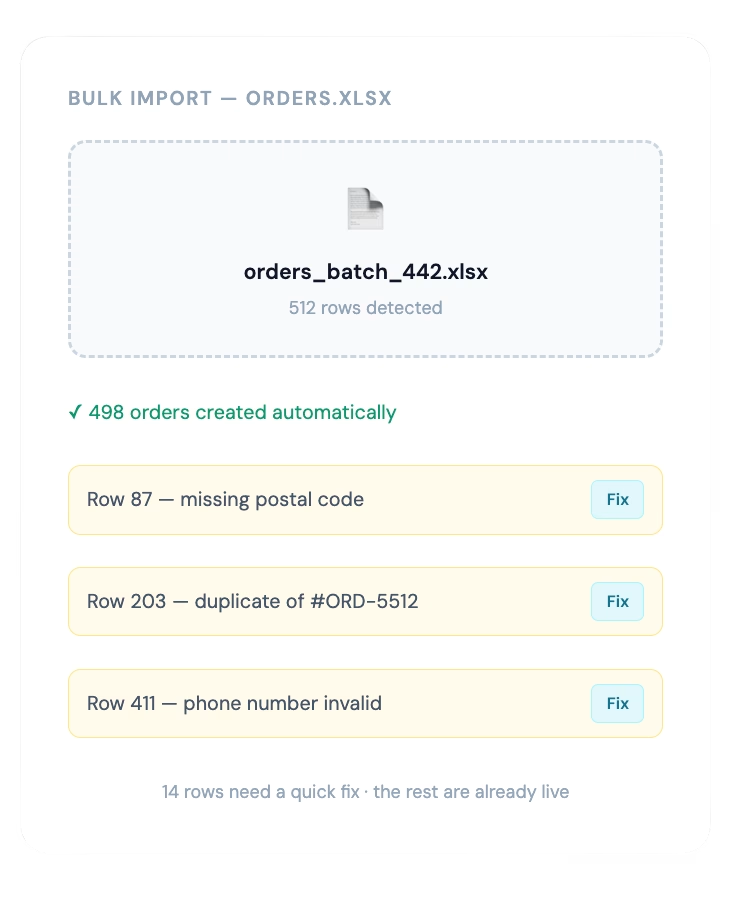
Give MAC a spreadsheet. Get back orders, not a headache.
Drop an Excel sheet into MAC and it creates the orders, every line, without a template fight or a failed import. Anything it can’t resolve on its own, a missing field, a mismatched address, a duplicate, it flags clearly and asks you to fix, instead of failing silently or creating bad data.
- Upload any Excel sheet, MAC creates the orders directly, no template wrestling
- Anomalies flagged clearly, missing fields, mismatches, duplicates
- Clean rows are created immediately, flagged rows wait for your fix
- No bad data slips through silently, every anomaly is surfaced, never guessed at
One agent for Your team and your customers.
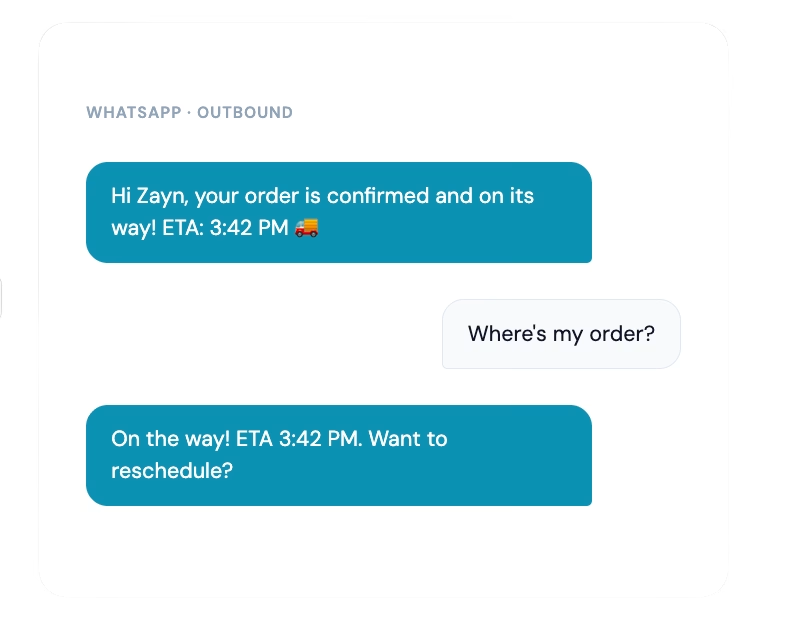
The same agent handles outbound conversations with your end customers, confirming orders, verifying addresses, sending delivery reminders, over WhatsApp, SMS, email, or voice. Internal action and external communication, from one system.
- Confirms orders and verifies addresses with customers automatically.
- WhatsApp, SMS, email, and voice, in the customer’s own language and dialect.
- Frees your team from repetitive confirmation calls and messages.
One agent, the whole operation
MAC isn’t a separate product you bolt on. It’s embedded everywhere Mile already runs, and it does real work, not just retrieval.
Continuous optimization
Re-optimizes routes, slotting, and schedules in real time as conditions shift, before they become exceptions.
Corrective action
Reassigns drivers and reroutes deliveries automatically when an exception puts an SLA at risk.
Direct record updates
Updates addresses, statuses, and flags in place, with old and new values always visible.
Bulk import + anomaly fixing
Hand it a spreadsheet, get back created orders, with anomalies flagged for a quick fix.
Configuration by conversation
Re-optimizes routes, slotting, and schedules in real time as conditions shift, before they become exceptions.
Instant answers
Ask anything in plain language and get a real answer pulled from live data, with the next step suggested.
Your competitors are already talking to MAC.
النتائج التي تهم فعلا.
ليس سيئا، أليس كذلك؟
الأسئلة الشائعة
Does MAC actually take actions, or does it just flag issues?
Both, depending on how clear-cut the situation is. Routine, rule-bound cases like reassigning a driver or fixing a flagged address get handled directly. Anything ambiguous or high-stakes gets escalated to a person instead, with full context attached. MAC doesn’t guess past the point it’s confident.
Can I see what MAC has changed?
Yes. Every action is logged with the old and new values, what triggered it, and when it happened. Nothing changes silently.
What happens to anomalies MAC can't fix on its own?
They’re surfaced clearly, whether that’s a flagged row in a bulk import, a low-confidence address, or an exception that needs a human decision. MAC never guesses past the point it’s confident, it hands off with full context instead.
Does MAC just react to problems, or does it optimize proactively too?
Both, and the proactive side is the bigger part of the job. MAC continuously re-evaluates routes, warehouse slotting, and schedules as conditions change, fixing small things before they become exceptions. Corrective action is the safety net for what gets through anyway.
Can I configure things in Mile without going through settings screens?
Yes. Describe the zone, pricing tier, or routing rule you want in plain language, and MAC sets it up, showing you exactly what it created before it goes live. It works the same way across Orders, Fleet, Warehouse, and Shipper.
Does MAC work the same way in every module?
Yes. The same agent is embedded inside Orders, Fleet, Warehouse, and Shipper. What it acts on changes with the module, but the way it works is consistent everywhere.
Does MAC only act on its own, or can I ask it direct questions too?
Both, equally. You can ask MAC anything in plain language and get a direct answer, or let it work in the background and only hear from it when something needs your attention. Asking and acting run through the same agent, you choose how you use it.
Is my operational data used to train any underlying models?
No. Your data is used to act on your operation, not to train models shared across customers. Speak to your account team for the full data handling policy.
اللوجستيات المدعومة بالذكاء الاصطناعي هنا. لا تكن الأخير.
"MAC is changing how your teams work. Be part of it."

The Autonomous Logistics OS
Policies and Terms
More Info...
@ 2026 Mile . All Right Reserved